Folk of the Air by Holly Black
“If I cannot be better than them, I will become so much worse”
Disclaimer: Apologies if my wording doesn’t fully match the English version of the saga; I read it in German and am translating it as best I can.
Rêvez
Disclaimer: Apologies if my wording doesn’t fully match the English version of the saga; I read it in German and am translating it as best I can. Rêvez
The story follows Jude Duarte, who, at a very young age, is kidnapped from the human world by her mother’s ex-husband. In the process, he kills her parents and takes Jude, her twin sister Taryn, and their half-sister Vivienne to the world of Elfhame. There, they grow up as the “daughters” of General Madoc, the High King’s general, who trains them in warfare, strategy, and political thinking.
What was sold to me as an “enemies-to-lovers” story turns out to be much more political, though still firmly rooted in young adult literature, with a relatively straightforward and accessible treatment. Personally, I preferred this political intrigue over a purely romantic plot—though, yes, romance does play a role and has its importance in the story.
As Jude grows, she has one desire: to belong to the magical world as if she were one of them. But to do so, she must rise above her human traits, which are repeatedly described as “fragile” and fleeting:
“I am, a bastard daughter of a faithless wife, a human without a drop of faerie blood, to be treated like a trueborn child of Faerie.”
“She finishes braiding my hair into an elaborate style that makes me look as though I have horns. She dresses me in sapphire velvet. None of it disguises what I am: human.”
“Could the High King of Faerie really give me that? Could he make me something other than human, something other than mortal?”
It’s clear how much she suffers from being only “human.” And so she seeks the one thing accessible even to the fae: power. The series begins with her simple wish to become a knight, but she quickly becomes an espionage agent entangled in royal affairs (family betrayals, spying, and double-dealing). Jude doesn’t just survive this world; she masters it, learning its rules, playing by them and eventually bending them to her will.
That, to me, is what The Folk of the Air trilogy is really about: Jude’s rise to power, the complexity of maintaining it, and navigating a political world where no one (nor friends or family included) plays fair.
“If you hurt me, I wouldn’t cry. I would hurt you back.”
I absolutely loved this series. It’s still young adult in tone and accessible, despite some violent scenes. For me, the most shocking moment remains the prologue of the first book; after that, it’s intense but far less overwhelming.
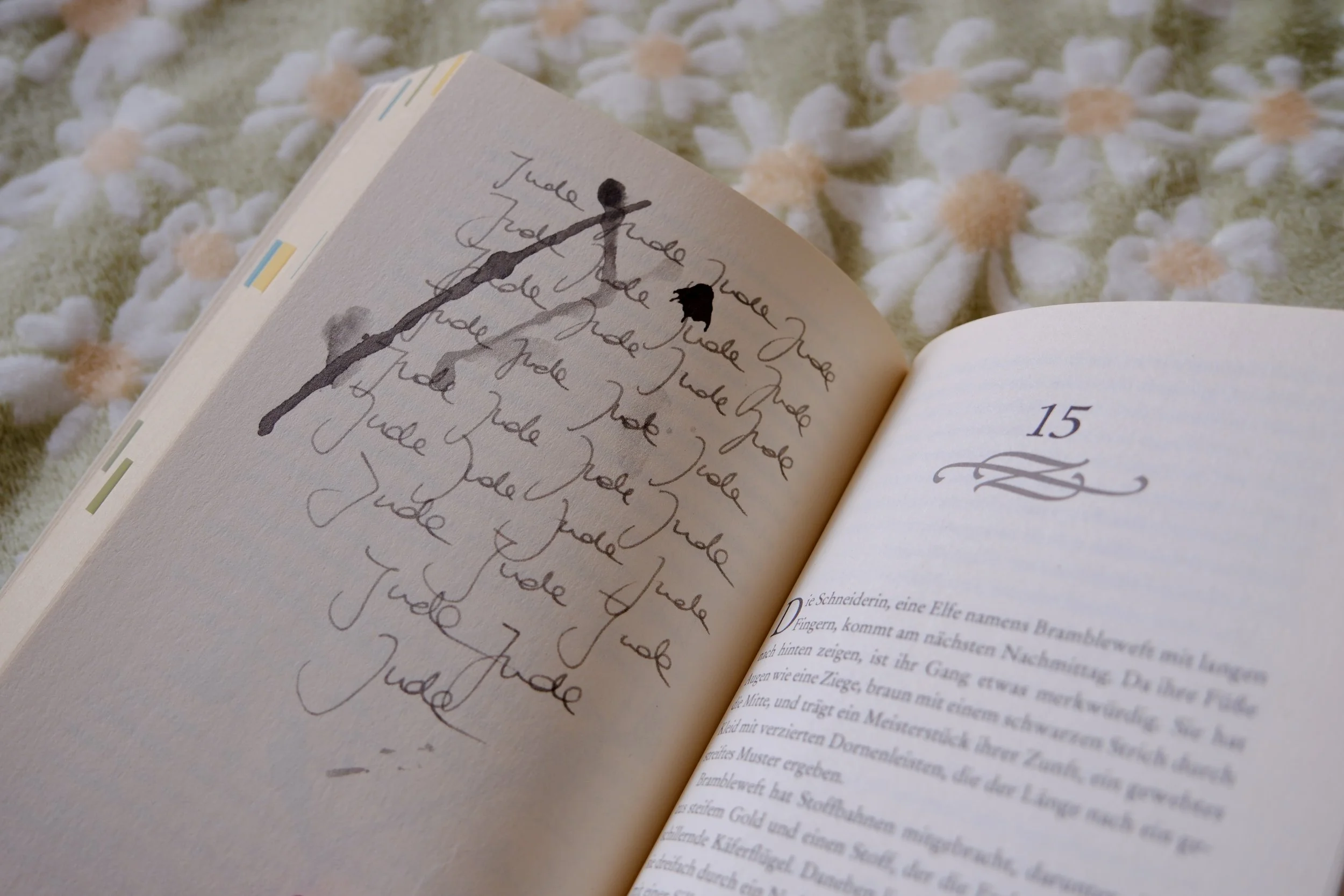
"I hate you … say it again"
There are indeed several romantic subplots that add depth to the saga. Jude suffers in Elfhame because one of the royal princes, Cardan who gives its name to the first book The Cruel Prince, takes pleasure in being … well…cruel and regularly targets her with his group of friends. But at some point, their fates cross in a way that works to Jude’s advantage, and she learns to use it… yet, as cold, calculating, and strategy-focused as she is, her humanity still shines through in undeniable feelings for the prince.
Their romance is secondary to the story; the personal and political intrigue takes precedence, especially in the first book. This lets readers see both of them as complex, three-dimensional individuals before romance ever develops. Jude’s identity is never about being “Cardan’s love interest”: she is Madoc’s daughter, Taryn’s sister, a schemer, a survivor first. I thought this was very well handled: it’s not a sappy romance. Jude always prioritizes her political goals and ambitions over her feelings for him (and anyone really), because deep down, she knows that the only thing she can truly rely on is herself and her game. Still, it’s incredibly dynamic to watch them: hating each other, then caring, betraying, despising, and forming alliances again. The tension keeps the story lively and thrilling.
“And Cardan is even more beautiful than the rest, with black hair as iridescent as a raven’s wing and cheekbones sharp enough to cut a girls heart. I hate him more than all the others. I hate him so much that sometimes when I look at him I can hardly breathe”
This romantic storyline is important because there’s real depth to why Jude and Cardan love each other. Their shared childhoods, traumas, and the rare moments when they let themselves be vulnerable make their connection feel almost healing. They’re both unconventionally messed up: Jude is furious at the world and craves power to avoid feeling powerless, constantly scheming and strategizing for it. Cardan, on the other hand, starts off absolutely cruel. Cruel just because he can, not because he had “noble reasons.” He softens around Jude eventually, but he still has no scruples about cruelty… he just knows she won’t tolerate it.
They stand out from most romantasy protagonists because their flaws aren’t excused or retconned. In other books, characters often get a backstory that justifies their bad behavior in a “he only seemed cruel, but he had noble reasons,” or “she was misguided” way : Jude and Cardan, by contrast, are unapologetically flawed. Holly Black never softens that truth, and I think that’s part of why they make such a compelling couple.
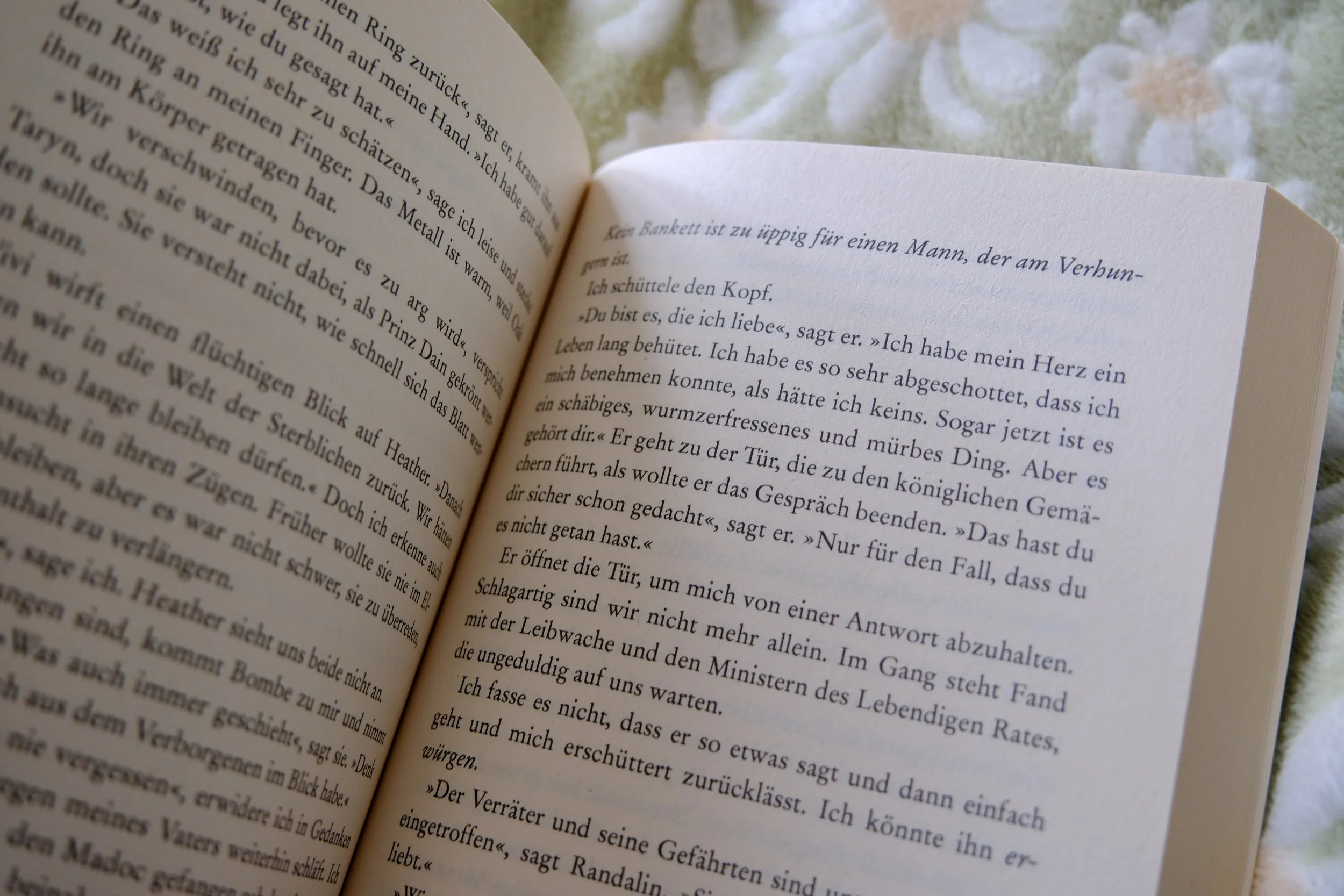
Queen of Nothing quote:
“It’s you I love,” he says. “I spent much of my life guarding my heart. I guarded it so well that I could behave as though I didn’t have one at all. Even now, it is a shabby, worm-eaten, and scabrous thing. But it is yours.” He walks to the door to the royal chambers, as though to end the conversation. “You probably guessed as much,” he says. “But just in case you didn’t.”
Cardan is also interesting because he’s not some all-knowing, godlike faerie prince. Early on he appears like a drunken, irresponsible boy, but as the story unfolds, we see more layers (he’s perceptive and clever), but he’s kind of a loser at times, which makes him feel real, “like a prince (but) dressed in rags.”
Ultimately, what makes their relationship so compelling is that both are morally grey. They do good and bad for their own reasons, and neither pretends to be a “good person.” They admit their past cruelty and selfishness without excuse. The romance works because it isn’t the point: it’s the fallout of two deeply complex, morally ambiguous characters finding a connection in a world that constantly tests them.
“I am horrified by how much he looks like the King of Faerie. I am horrified by my own impulse to bend my knee to him, my own desire to let him touch my head with a ringed hand. What have I done? For so long, there was no one I trusted less. And now I must contend with him, must match my will to his. His oath does not seem enough of an antidote against his cleverness. What in the world have I done?”
Holly Black crafts a world where loyalty is never guaranteed, where love and hate are often intertwined, and where characters are allowed to be genuinely human (or faerie) in all their brilliance, cruelty, and complexity.
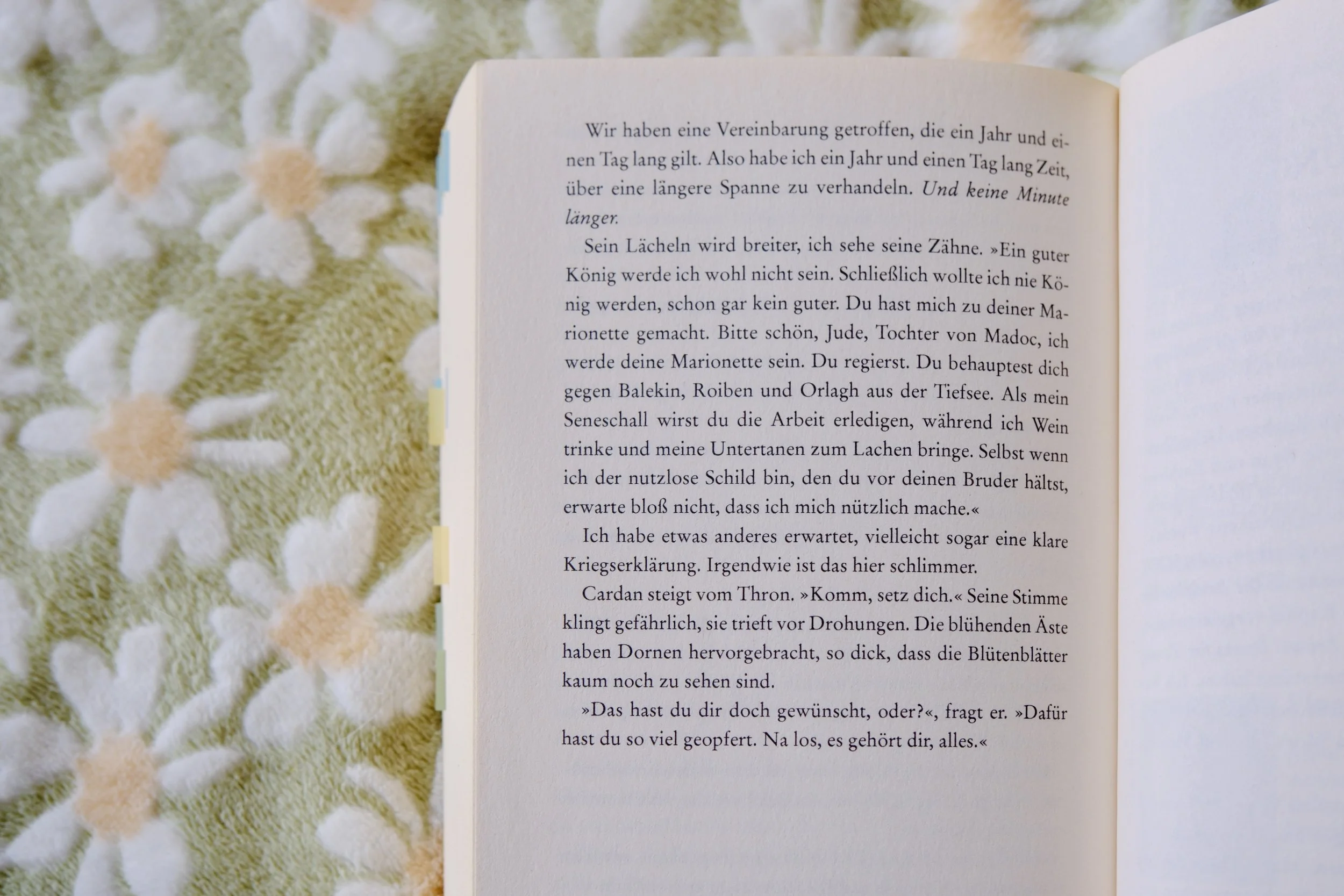
« He rises from the throne. “Come, have a seat.” His voice is replete with danger, lush with menace. The flowering branches have sprouted thorns so thickly that petals are barely visible.“This is what you wanted, isn’t it?” he asks. “What you sacrificed everything for. Go on. It’s all yours. »
